Jerez de la Frontera brings together institutions and the Rroma civil society to support the implementation of regional strategies aimed at the Rroma People
The workshop organised by the Inter-Autonomous Strategic Rroma Forum (FEIG) highlighted the need to strengthen institutional commitments to the Rroma People, warning of the risks of abandoning specific strategies and calling for progress in the monitoring of public policies at both national and regional levels
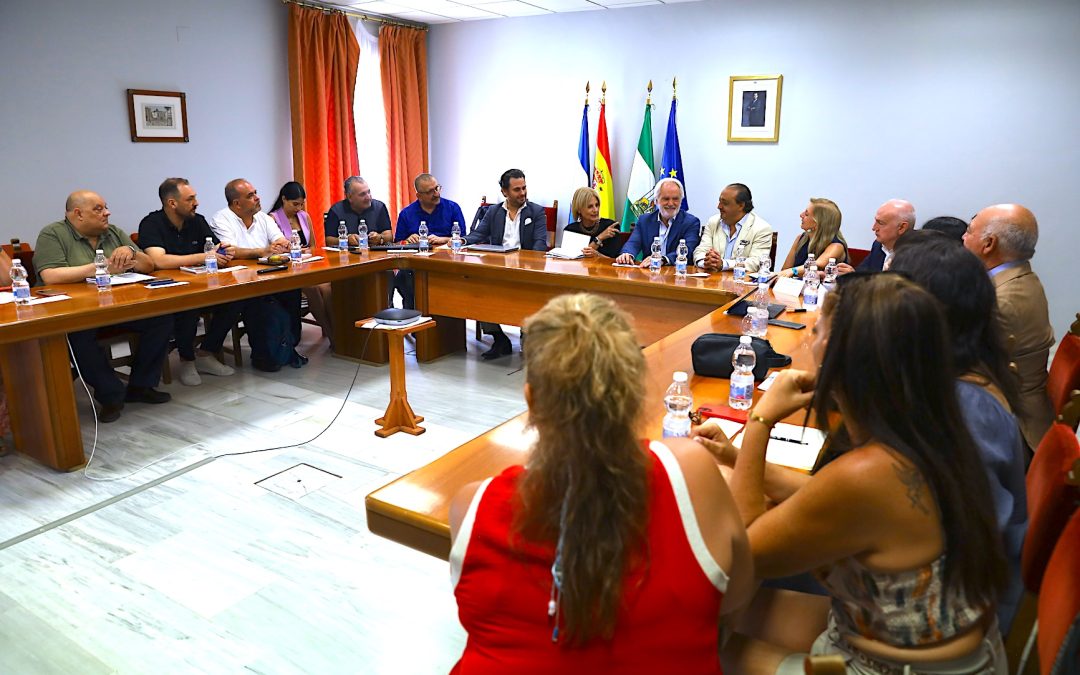
On 28 July, Jerez de la Frontera Town Council hosted the conference ‘The Impact of Rroma Strategies and Policies at Local and Regional Level’, organised as part of the 2026 Inter-Regional Rroma Strategic Forum (FEIG 2026), an initiative jointly promoted by the National Association for Rroma Presence (ANPG), the Federation of Rroma Associations of Catalonia (FAGIC) and La Fragua Projects (LFP).
The opening of the event was attended by the Mayor of Jerez de la Frontera, María José García-Pelayo, who welcomed the organisations and individuals present and expressed her support for the objectives of the event and for the work carried out by Rromani organisations to promote equality, participation and inclusion. In her speech, she highlighted the importance of strengthening collaboration between public authorities and civil society in order to continue making progress on rights and full citizenship.
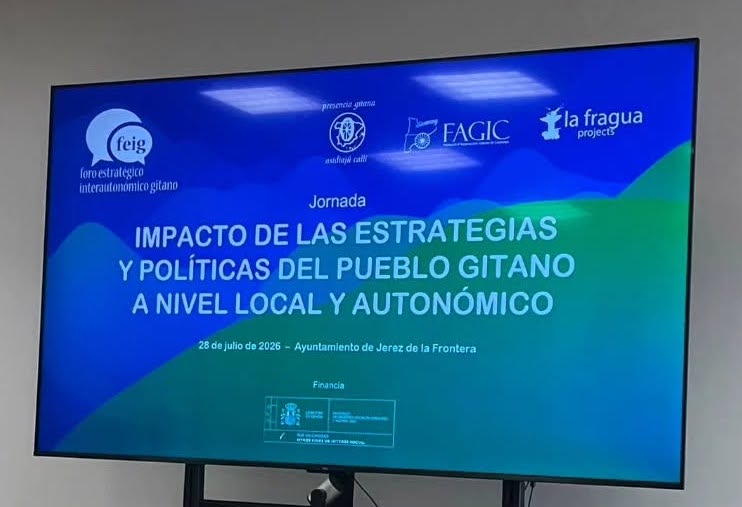
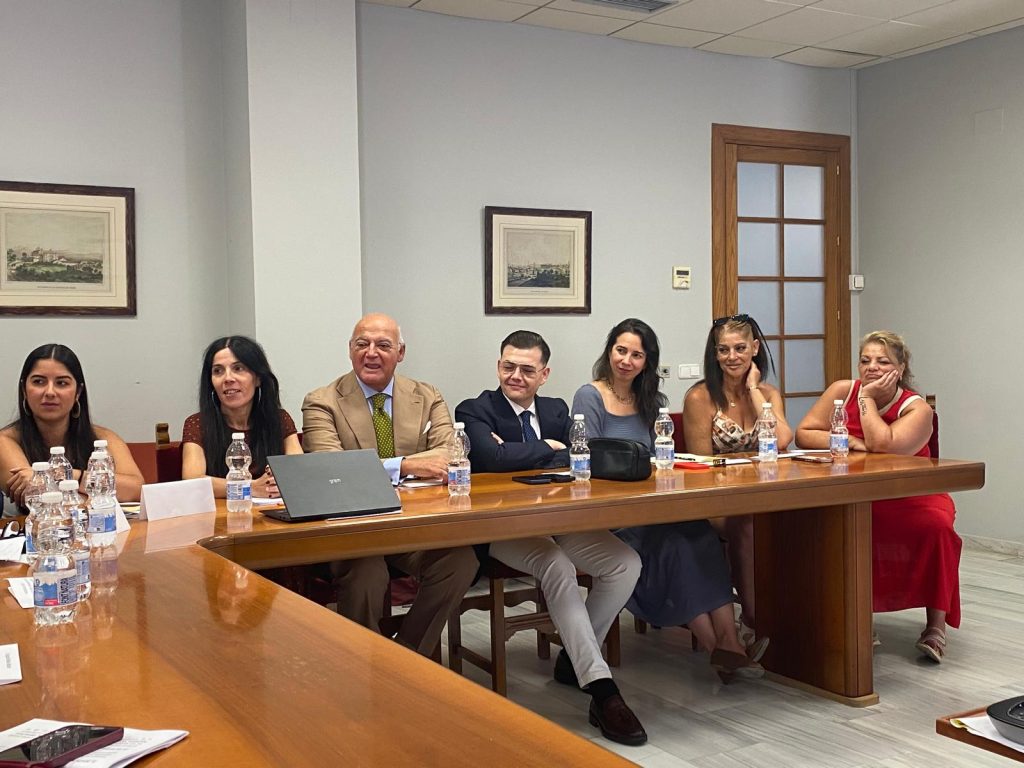
The event brought together institutional representatives, representatives of the National Council of the Rroma People and the Andalusian Council of the Rroma People, Rromani organisations, social organisations and experts to analyse the state of public policies aimed at the Rroma People and to discuss the challenges currently faced by the various administrations in fulfilling their commitments regarding equality, inclusion and participation.
The choice of Jerez de la Frontera as the venue for the meeting held special significance for the participating organisations. The city occupies a prominent place in the history and contemporary reality of the Rroma People. As a cultural, social and artistic hub, Jerez represents one of the places where the Rromani contribution has been recognised and valued as a fundamental element of collective identity. The historical presence of Rromani families, artists and leading figures has contributed decisively to the city’s cultural prestige, making it a particularly symbolic place for Rromani civil society. Holding a conference there dedicated to public policy and participation provided an opportunity to link the institutional debate with a region deeply connected to the history, culture and contributions of the Rromani people.
During the session, the FEIG 2025 report – drawn up by the project’s partner organisations – was presented; it analyses the development of strategies and policies aimed at the Rroma People in Andalusia, Catalonia, Madrid and Navarre. The report notes that the National Strategy for Equality, Inclusion and Participation of the Rroma People 2021–2030 remains the main framework of reference, but also highlights the difficulties involved in translating its objectives into fully operational and assessable policies across the various regions.
One of the main issues addressed during the debate was concern over certain regressive trends that call into question the need to maintain specific strategies for the Rromani community at regional level. Participants warned that replacing these tools with generalist inclusion plans could dilute the focus on the specific inequalities still faced by the Rroma People and undermine the commitments made at both national and European level.
In this regard, the situation in Madrid and Navarre was analysed with particular concern. In both regions, approaches have been proposed that aim to dispense with specific strategies for the Rroma community and to integrate measures targeting the Rroma People into general frameworks for social inclusion. The participating organisations agreed that this approach carries the risk of a loss of visibility, political priority and the ability to monitor measures designed to combat the inequalities affecting the Rroma population.
Alongside these trends, the conference also highlighted the accumulated delays in the approval or updating of regional strategies in other territories. Although Andalusia and Catalonia are continuing with processes aimed at developing new strategic frameworks, delays in their final approval are hindering the implementation of fully operational policies and limiting the ability to properly assess the commitments made. The participating organisations emphasised that allowing strategies to remain pending renewal for years conveys a worrying lack of political priority regarding the rights and inclusion of the Rromani people.
Another cause for concern was the absence of the 2025 national progress report, a document considered essential for assessing the extent to which the National Strategy is being implemented. The participating organisations pointed out that accountability, transparency and the regular publication of up-to-date information are essential for assessing the real impact of public policies and guiding future courses of action.
Within this framework, La Fragua Projects has been playing a significant role in the development of the FEIG by conducting analyses, producing strategic content and generating knowledge on public policies aimed at the Rromani community. The organisation is actively involved in preparing monitoring reports, conducting comparative analyses of regional strategies and coordinating a broad network of partner organisations that help to enrich the debate and strengthen the advocacy capacity of Romani civil society.
The event also featured the participation of guest organisations such as the YILÓ Association, the Association of Teachers Working with Rroma (AEGIT), the KAMIRA Federation of Rroma Women’s Associations, the FAKALI Federation of Rroma Women, the Secretariado Gitano Foundation (FSG) and Unión Romaní Madrid (URM), alongside local organisations from Jerez de la Frontera, such as the Calle Nueva and Cantarería Cultural Association, as well as other social and institutional stakeholders, creating a diverse space for the exchange of experiences and the development of joint proposals.
The meeting once again highlighted the importance of maintaining forums for dialogue, coordination and monitoring to ensure that the commitments made by the various public authorities are translated into real, measurable public policies that are sustainable over time. Against a backdrop where some strategies are at risk of being abandoned and others are years behind schedule, the participating organisations emphasised the need to strengthen participatory mechanisms and to maintain specific policies that enable progress towards effective equality for the Rroma People.
Source: La Fragua Projects
Photos: La Fragua Projects