The workshop organised by the Inter-Autonomous Strategic Rroma Forum (FEIG) highlighted the need to strengthen institutional commitments to the Rroma People, warning of the risks of abandoning specific strategies and calling for progress in the monitoring of public policies at both national and regional levels
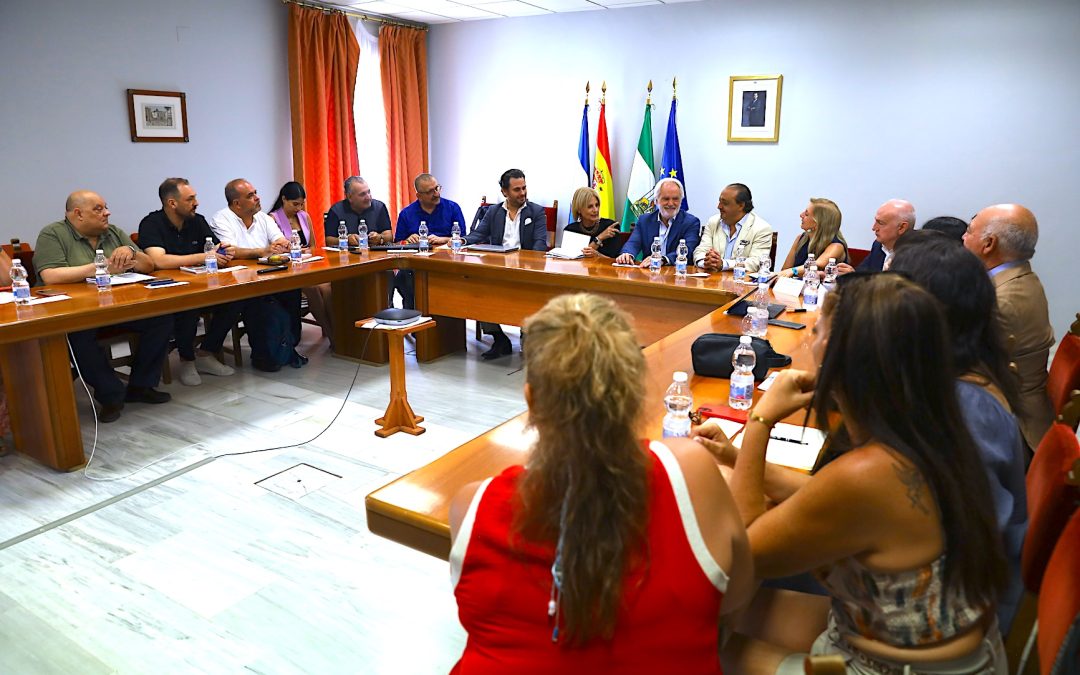
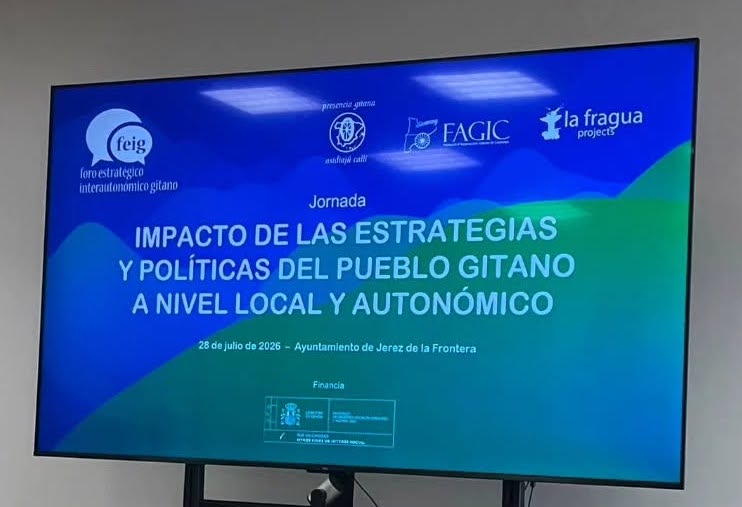
On 28 July, Jerez de la Frontera Town Council hosted the conference ‘The Impact of Rroma Strategies and Policies at Local and Regional Level’, organised as part of the 2026 Inter-Regional Rroma Strategic Forum (FEIG 2026), an initiative jointly promoted by the National Association for Rroma Presence (ANPG), the Federation of Rroma Associations of Catalonia (FAGIC) and La Fragua Projects (LFP).
The opening of the event was attended by the Mayor of Jerez de la Frontera, María José García-Pelayo, who welcomed the organisations and individuals present and expressed her support for the objectives of the event and for the work carried out by Rromani organisations to promote equality, participation and inclusion. In her speech, she highlighted the importance of strengthening collaboration between public authorities and civil society in order to continue making progress on rights and full citizenship.
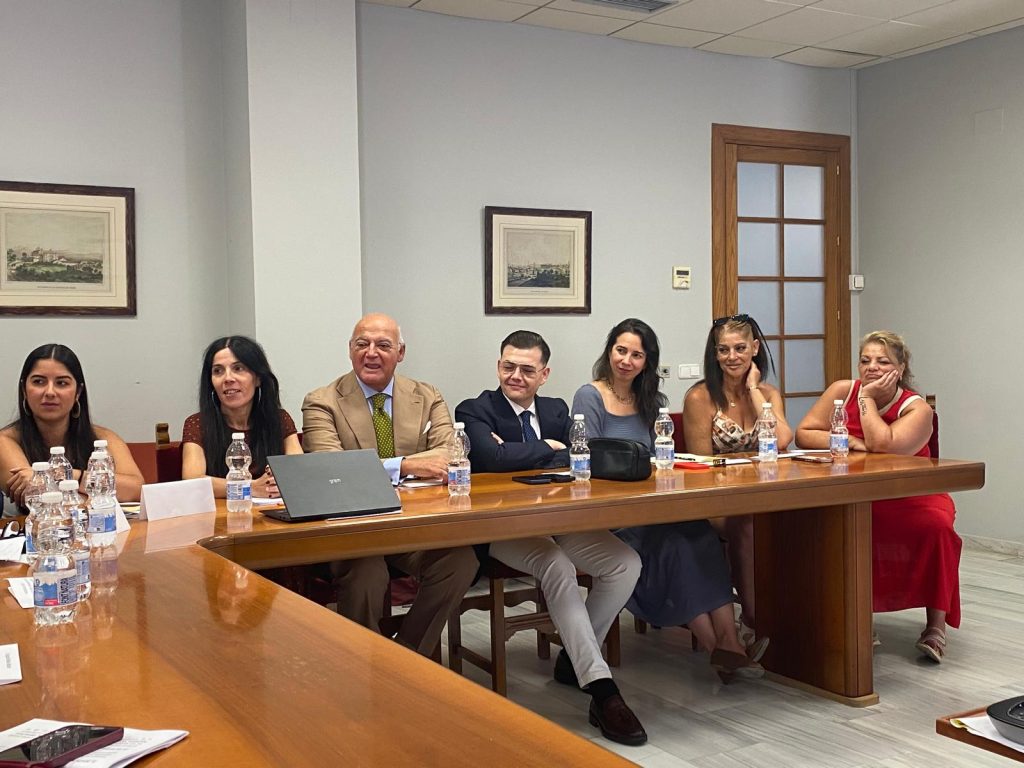
The event brought together institutional representatives, representatives of the National Council of the Rroma People and the Andalusian Council of the Rroma People, Rromani organisations, social organisations and experts to analyse the state of public policies aimed at the Rroma People and to discuss the challenges currently faced by the various administrations in fulfilling their commitments regarding equality, inclusion and participation.
The choice of Jerez de la Frontera as the venue for the meeting held special significance for the participating organisations. The city occupies a prominent place in the history and contemporary reality of the Rroma People. As a cultural, social and artistic hub, Jerez represents one of the places where the Rromani contribution has been recognised and valued as a fundamental element of collective identity. The historical presence of Rromani families, artists and leading figures has contributed decisively to the city’s cultural prestige, making it a particularly symbolic place for Rromani civil society. Holding a conference there dedicated to public policy and participation provided an opportunity to link the institutional debate with a region deeply connected to the history, culture and contributions of the Rromani people.
During the session, the FEIG 2025 report – drawn up by the project’s partner organisations – was presented; it analyses the development of strategies and policies aimed at the Rroma People in Andalusia, Catalonia, Madrid and Navarre. The report notes that the National Strategy for Equality, Inclusion and Participation of the Rroma People 2021–2030 remains the main framework of reference, but also highlights the difficulties involved in translating its objectives into fully operational and assessable policies across the various regions.
One of the main issues addressed during the debate was concern over certain regressive trends that call into question the need to maintain specific strategies for the Rromani community at regional level. Participants warned that replacing these tools with generalist inclusion plans could dilute the focus on the specific inequalities still faced by the Rroma People and undermine the commitments made at both national and European level.
In this regard, the situation in Madrid and Navarre was analysed with particular concern. In both regions, approaches have been proposed that aim to dispense with specific strategies for the Rroma community and to integrate measures targeting the Rroma People into general frameworks for social inclusion. The participating organisations agreed that this approach carries the risk of a loss of visibility, political priority and the ability to monitor measures designed to combat the inequalities affecting the Rroma population.
Alongside these trends, the conference also highlighted the accumulated delays in the approval or updating of regional strategies in other territories. Although Andalusia and Catalonia are continuing with processes aimed at developing new strategic frameworks, delays in their final approval are hindering the implementation of fully operational policies and limiting the ability to properly assess the commitments made. The participating organisations emphasised that allowing strategies to remain pending renewal for years conveys a worrying lack of political priority regarding the rights and inclusion of the Rromani people.
Another cause for concern was the absence of the 2025 national progress report, a document considered essential for assessing the extent to which the National Strategy is being implemented. The participating organisations pointed out that accountability, transparency and the regular publication of up-to-date information are essential for assessing the real impact of public policies and guiding future courses of action.
Within this framework, La Fragua Projects has been playing a significant role in the development of the FEIG by conducting analyses, producing strategic content and generating knowledge on public policies aimed at the Rromani community. The organisation is actively involved in preparing monitoring reports, conducting comparative analyses of regional strategies and coordinating a broad network of partner organisations that help to enrich the debate and strengthen the advocacy capacity of Romani civil society.
The event also featured the participation of guest organisations such as the YILÓ Association, the Association of Teachers Working with Rroma (AEGIT), the KAMIRA Federation of Rroma Women’s Associations, the FAKALI Federation of Rroma Women, the Secretariado Gitano Foundation (FSG) and Unión Romaní Madrid (URM), alongside local organisations from Jerez de la Frontera, such as the Calle Nueva and Cantarería Cultural Association, as well as other social and institutional stakeholders, creating a diverse space for the exchange of experiences and the development of joint proposals.
The meeting once again highlighted the importance of maintaining forums for dialogue, coordination and monitoring to ensure that the commitments made by the various public authorities are translated into real, measurable public policies that are sustainable over time. Against a backdrop where some strategies are at risk of being abandoned and others are years behind schedule, the participating organisations emphasised the need to strengthen participatory mechanisms and to maintain specific policies that enable progress towards effective equality for the Rroma People.
Source: La Fragua Projects Photos: La Fragua Projects
As part of the ‘Orgullo Gitano. Sevilla 2026’ event, three declarations have been presented which set out a collective stance and launch a nationwide process aimed at strengthening the rights of LGBTIQ+ Rromani people.
These documents stem from the opportunities for participation created during the meeting and reflect a clear commitment to recognising sex and gender diversity within the Rromani community as a historical, political and social reality that requires recognition, resources and specific responses.
Three complementary perspectives for a shared agenda
The statements relate to three distinct areas, which have made it possible to explore specific experiences and needs in greater depth from a context-specific perspective.
On the one hand, the Aliades Space Declaration highlights the role of the alliance as a tool for transformation. The document argues that change cannot rest solely with those who suffer discrimination, but requires the active involvement of other social actors, based on shared responsibility and sustained commitment.
The text emphasises that being an ally is not merely a symbolic stance, but a practical commitment that involves examining one’s own privileges, taking action against inequalities and helping to create safer and more inclusive environments.
Furthermore, the GTBIQ Space Declaration, which focuses on Rromani men and non-binary people, directly addresses the intersection between anti-Romani sentiment and LGTBIQphobia. The document highlights how these forms of discrimination reinforce one another and give rise to specific situations of exclusion.
It also emphasises the need to establish role models, strengthen networks and move towards a political agenda of its own that will enable these issues to be placed at the centre of public debate and public policy.
The LBTIQ Space Declaration, which focuses on Rromani women and non-binary people, highlights their historical invisibility, the silence surrounding their experiences, and the material and emotional impacts of discrimination.
The document highlights the importance of reclaiming collective memory, creating spaces of their own and strengthening leadership that enables Romani women and people of diverse gender identities to participate fully in social, community and institutional life.
From reflection to the establishment of a national network
Beyond the analysis, the three documents share a common goal: the establishment of a national network of LGBTIQ+ Rroma people.
This proposal is not merely intended as an organisational structure, but as a space for mutual support, the generation of our own knowledge and political advocacy. It is a necessary step towards overcoming the current fragmentation and moving towards collective responses to inequalities.
The statements also highlight the limitations of current public policies, which in many cases fail to incorporate an intersectional perspective capable of simultaneously addressing anti-Rroma bias and sex and gender diversity.
A starting point for a sustained process
The Seville Statements 2026 is not intended to provide a definitive assessment, but rather to mark the start of a new phase.
A process that places dignity, equality and human rights at its heart, and which positions LGBTIQ+ Rroma people as key players in developing responses to discrimination.
From this starting point, the challenge is no longer simply to share a common framework, but to translate it into concrete actions, genuine partnerships and sustainable change over time.
It is presented at the annual plenary session of the Xarxa BCN Antirumors held on June 26.
The organisation presents a proposal focused on meaningful participation, impact evaluation and transforming public narratives, in the context of the 15th anniversary of the municipal strategy.
On 26 June, the Palau Alòs Youth Centre became a meeting point to reflect on the present and future of the BCN Anti-Rumour Network. In a session marked by shared experiences and critical thinking, Imma Anegas González and María Aguilera Martín, representing La Fragua Projects, played a key role by presenting their proposal for the development of the new 2027–2031 action plan.
An important step at a key moment: fifteen years after the strategy began, in a context where hate speech is intensifying and taking on new forms.
A proposal to bring anti-racism into real policies
Far from being a purely theoretical document, La Fragua Projects’ proposal is designed as a practical tool for the Network and the city. The goal is clear: to strengthen the Network’s role as a key actor within public policies to combat racism.
As presented, the new plan is an opportunity to consolidate the Network’s capacity to influence, improve its monitoring mechanisms and ensure that its actions have a real impact on people’s lives.
To achieve this, the proposal is built on three key ideas. First, co-creation with organisations, recognising that participation cannot be symbolic but must shape decision-making. Second, a culture of evaluation, capable of measuring not only activities, but real changes in perceptions, narratives and social relations. And finally, operability: turning strategies into concrete and viable actions.
As highlighted during the presentation itself, this is a plan “built with organisations” and designed to be adapted along the way, with a clear objective: to generate impact in everyday life.
A participatory process with a critical perspective
The methodological approach presented by La Fragua Projects structures the plan into several phases: analysis of previous work, consultation with organisations, definition of priorities and final validation.
A central element is the design of more useful and accessible participatory spaces, aimed at enabling genuine involvement from organisations, especially those that have traditionally been underrepresented.
In addition, the plan incorporates an intersectional and intercultural approach, alongside a critical perspective that challenges the structures that sustain inequalities.
A day combining reflection and lived experience
The presentation of the plan was part of at the annual plenary session, where the results of the Network’s participation study were also shared and spaces for dialogue about its future were opened.
Interventions such as that of Richard Sánchez, who stated that “what used to be rumours are now hate speech”, placed the debate within the urgency of the current context.
The interview with Yousra Touri El Mansouri and the screening of the short film “Serem el que sempre hem desitjat” brought in lived experiences, while voices such as Doris Boira Bueso highlighted the importance of creating real spaces for dialogue to confront racism.
A new cycle for the Network
The proposal presented by La Fragua Projects opens a new chapter for the BCN Anti-Rumour Network. A chapter that is not only about planning, but about the ability to transform realities.
As became clear during the session, the key is not only to design a strong plan, but to build it alongside those who sustain the work on the ground and ensure that this effort translates into concrete change: fewer hate narratives, more spaces for dialogue and a more just city for everyone.
Source: La Fragua Projects Photos: La Fragua Projects
This is the first LGBTIQ+ Rromani gathering in Spain since 2017, aimed at building networks, raising awareness of people’s experiences and creating safe spaces
Two days of activities, dialogue and culture have shaped the first LGBTIQ+ Rromani gathering in Seville since 2017 – and the first of its kind in Andalusia and Seville – a pioneering initiative that places the voices of Rromani gender and sexual diversity at the centre, alongside their right to live with dignity, without fear and as part of a community.
On 18 and 19 June 2026, the Hogar Virgen de los Reyes in Seville hosted a gathering that went far beyond the official agenda. Above all, it was a space to assert our identities, recognise one another and collectively build new ways of being and resisting racism and LGBTIphobia.
The programme combined private, safe spaces with activities open to the public, striking a balance between personal care and social visibility.
A safe space to start sharing
The first day began with a safe space session aimed at LGBTIQ+ Rroma People, designed as a protected space where they could speak from their own experience. From the welcome session through to the group discussion sessions (LGBTIQ, GTBIQ and allies), the day focused on building trust, sharing experiences and putting into words realities that are often left out of the public narrative.
These discussions addressed key issues such as relationships with family and the community, the experience of living in the closet, and the need to have one’s own support networks. The session concluded with a group discussion which also served to raise a question for the future: what role should a potential LGBTIQ+ Rromani network play, and what priorities should it set?
Far from being a mere exchange of ideas, the meeting took shape as a first concrete step towards collective action.
Activism, culture and critical thinking
On the afternoon of 18 June, the programme broadened its scope with a series of open discussions bringing together activists, thinkers and cultural figures. Over the course of several hours, topics such as culture as a tool for transformation, Rromani transfeminism and tensions with hegemonic masculinity both within and outside the community were explored.
The contributions went beyond theory. They addressed specific lives, real conflicts and strategies for tackling violence. Within this framework, the reading of the ‘Seville 2026 Declarations’ gave a collective voice to the demands and reflections arising from different perspectives: LBTIQ and GTBIQ Rroma people and their allies (both Rroma and non-Rroma).
The event also incorporated artistic expression, with audiovisual screenings and a symbolic closing ceremony featuring a toast to Rroma Pride. A simple gesture which, in this context, takes on a profound meaning: celebrating existence, pride and the right to be.
Culture to open up cracks
The event was not limited to talks. The cultural programme played a central role, featuring a performance of the play ‘Puños de harina’ and book launches such as ‘Biopolítica del Armario’ and ‘Propaganda Queer’.
These proposals broadened the narrative by drawing on other languages, demonstrating how culture can also be a political tool and a space for resistance.
Pioneers who lead the way and recognition that matters
One of the symbolic moments of the event was the recognition of the actress Alba Flores as an LGBTIQ+ role model. This recognition took place as part of the 2nd LGBTIQ+ Awards Gala, where she was honoured in the ‘Role Model’ category alongside other key figures.
The award, nominated and accepted on her behalf by La Fragua Projects, through Iñaki Vázquez and Celia Montoya, highlights the importance of having visible role models who pave the way, especially for those who grow up without role models to look up to.
Alongside Alba Flores, the contributions of others – such as Shannis’s work in defending trans rights – were also recognised, broadening the focus to include other vital struggles within the LGTBIQ+ movement. This kind of recognition is not merely symbolic: it helps to shape our collective narrative, memory and vision.
A first step that leaves its mark
This first LGTBIQ+ Rromani gathering has not merely been an event, but a starting point. It has served to give a voice to a reality that exists, even though it has historically been rendered invisible, and to forge the first connections in a network that aims to continue growing.
In a context where anti-Rroma sentiment and LGBTI-phobia continue to shape people’s lives, initiatives such as this are not only necessary: they are urgent. The experience in Seville has left those who took part with a shared conviction: when people create their own safe, collective spaces, things happen.
And this was just the first one.
Source: La Fragua Projects Images: La Fragua Projects Photo: Alba Flores
For the first time, the city is hosting a dedicated programme that raises awareness of the realities faced by the LGBTIQ+ Rroma community as part of Pride 2026, featuring events, theatre and cultural activities
On Thursday, Seville hosted the first edition of Rroma Pride, a pioneering initiative that forms part of the city’s Pride programme under the slogan ‘Diversity without permission, Pride without limits’. The project aims to raise the profile of the voices, experiences and demands of the LGBTIQ+ Rroma community.
The Equality Officer for Seville City Council, José Luis García, emphasised that this proposal represents a step forward towards achieving “a Pride that truly belongs to everyone and is for everyone”. As he pointed out, the LGBTIQ+ Rroma community faces a dual reality, and recognising their activism, culture and diversity represents “an act of justice and respect”.
The programme kicked off at the Hogar Virgen de los Reyes with a gathering of the Rromani gender and sexual minority community, where activists from Andalusia and other parts of Spain shared experiences and strategies to strengthen the Rromani LGBTIQ+ movement.
Debate and culture as tools for change
The event also featured discussions and round-table sessions open to the public, led by Iñaki Vázquez, director of La Fragua Projects. These sessions addressed topics such as Rromani culture as a driving force for social transformation, Rromani transfeminism, masculinities and the so-called ‘Romani closet’.
The first day concluded with a theatrical performance of ‹Puños de harina›, by Jesús Torres, at the Teatro del Hogar Virgen de los Reyes, as part of a programme combining social activism, art and reflection.
The events will continue this Friday with the launch of the books *Biopolítica del armario* and *Propaganda queer* by Javier Sáez, as part of the cultural programme for Rroma Pride.
The initiative forms part of Seville City Council’s Diversity Month, a programme through which the city commemorates LGBTIQ+ Pride and champions equality and the rights of the community in all areas of society.
Utilizamos cookies para optimizar nuestro sitio web y nuestro servicio.
Funcional
Always active
El almacenamiento o acceso técnico es estrictamente necesario para el propósito legítimo de permitir el uso de un servicio específico explícitamente solicitado por el abonado o usuario, o con el único propósito de llevar a cabo la transmisión de una comunicación a través de una red de comunicaciones electrónicas.
Preferencias
El almacenamiento o acceso técnico es necesario para la finalidad legítima de almacenar preferencias no solicitadas por el abonado o usuario.
Estadísticas
El almacenamiento o acceso técnico que es utilizado exclusivamente con fines estadísticos.El almacenamiento o acceso técnico que es utilizado exclusivamente con fines estadísticos anónimos. Sin una requerimiento, el cumplimiento voluntario por parte de su proveedor de servicios de Internet, o los registros adicionales de un tercero, la información almacenada o recuperada sólo para este propósito no se puede utilizar para identificarlo.
Marketing
El almacenamiento o acceso técnico es necesario para crear perfiles de usuario para enviar publicidad, o para rastrear al usuario en un sitio web o en varios sitios web con fines de marketing similares.